Manitoba has long occupied a unique position in the Canadian confederation—a "Keystone" province that serves as the bridge between the industrial East and the agricultural West. Historically, the province has demonstrated a remarkable ability to transform external global pressures, such as international conflicts and volatile energy markets, into catalysts for domestic growth, infrastructure innovation, and economic self-reliance. While the causal link between a war in Eastern Europe or the Middle East and the cost of a 2x4 in Selkirk or a liter of diesel at a Winnipeg construction site might seem daunting, the historical norm for Manitoba is one of induced resilience.
This analysis explores how Manitoba has turned the "triad of volatility"—wars, gas prices, and construction costs—into a positive narrative of provincial fortification.
I. The "Induced Innovation" Thesis: How External Pressure Builds Internal Strength
In economic history, the concept of "induced innovation" suggests that when a necessary resource (like fuel) becomes expensive due to external shocks (like war), the affected economy does not simply wither; it innovates to bypass the constraint. Manitoba is a textbook case of this phenomenon.
Whenever global conflicts have disrupted energy supply chains, causing gas and diesel prices to spike, Manitoba’s construction industry has historically shifted toward higher efficiency. In the 1970s, during the global energy crises sparked by Middle Eastern conflicts, Manitoba didn't just pay the higher fuel bills. Instead, the province pioneered the R-2000 building standards. High gas prices forced the construction sector to rethink logistics, leading to the development of a more centralized, efficient supply chain that utilized our rail heritage.
Today, in 2026, we see this cycle repeating. The volatility of the mid-2020s has pushed Manitoba construction firms to lead the country in the adoption of electric heavy machinery and geothermal heating integration. The "positive" outcome is a built environment that is significantly more decoupled from the whims of foreign oil-producing nations than it was fifty years ago.
II. The Historical Norm: War as a Catalyst for Resource Value
Historically, wars outside of Canada have placed a premium on the very things Manitoba produces best: food, minerals, and energy.
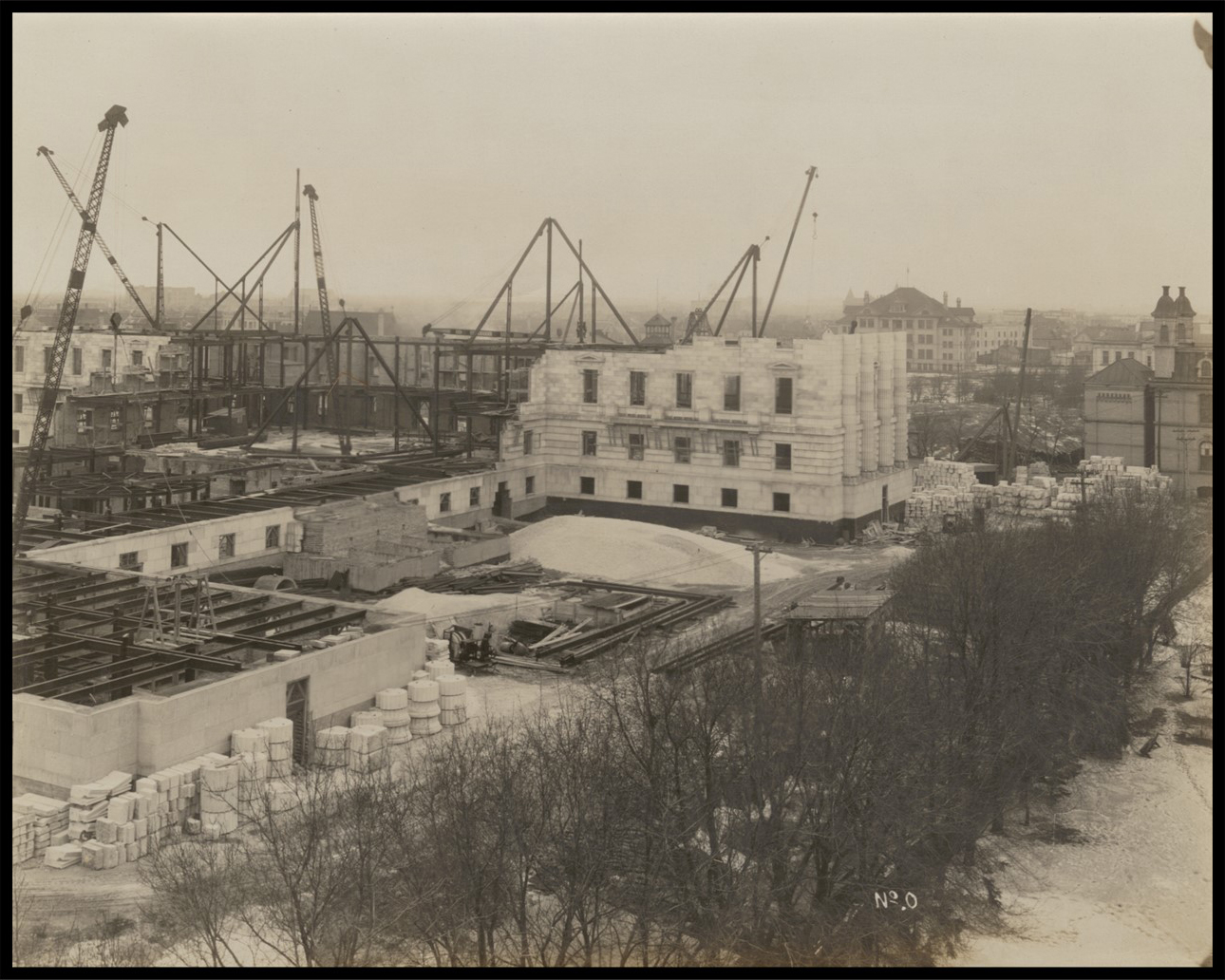
The Steel and Limestone Legacy: During the mid-20th-century conflicts, the demand for raw materials skyrocketed. This global demand funded the expansion of the "industrial complexes" in places like Selkirk. The prosperity brought in by high commodity prices during these eras was directly funneled back into the province’s construction sector. When global markets are uncertain, "hard assets" like Manitoba’s Tyndall stone and Selkirk-made steel become the bedrock of a "flight to quality."
The Hydro Sovereignty: Every time a war has caused a spike in natural gas or oil prices, the "value proposition" of Manitoba Hydro has increased. Historically, these spikes have provided the political and economic will to build massive projects like the Limestone Generating Station. These construction projects themselves provided thousands of high-paying jobs and stabilized the provincial economy while other regions were reeling from energy costs.
III. The Logistics of the Red River Valley: Gas and Gumption
Manitoba’s geography dictates that construction is a game of logistics. Because we are a landlocked province, the price of gas is a primary variable in the cost of gravel, cement, and lumber. However, this has created a "Survival of the Fittest" effect among Manitoba contractors.
Historically, when wars have driven gas prices to record highs, Manitoba construction firms have mastered the art of "Just-in-Time" delivery and local sourcing. Instead of importing materials from high-carbon, high-transportation-cost regions, the province has invested in local aggregate pits, local lumber mills, and local fabrication. This "Positive Localization" means that more money stays within the local economy. Every cent saved on a liter of gas through better logistics is a cent that can be reinvested into better wages for local tradespeople in areas like Daerwood Heights or Selkirk.
IV. Construction as an Inflation Hedge
During times of international war, inflation typically rises. For the Manitoba homeowner or developer, this creates a unique "Wealth Effect." While the input costs of construction (fuel and materials) rise, the value of the completed asset rises even faster.
In the last three months of 2025 and moving into early 2026, we have seen that despite global uncertainty, the demand for quality housing in Manitoba remains at an all-time high. This is because, in a world at war, Manitoba is viewed as a "Safe Harbor." Our construction prices are a reflection of our growth. High construction costs are often the "price of admission" for a booming economy. When a province is building, it is dreaming; and Manitoba has never stopped building.
V. The Social Multiplier: Building Communities in Uncertain Times
The connection between war, gas, and construction also has a profound social component. Historically, Manitoba has welcomed those fleeing conflict. These newcomers often find their first stable footings in the construction industry.
The "positive" correlation here is that international instability often brings a "Human Capital" boom to Manitoba. The very hands that help build the new 3-bedroom homes on Dorchester or the industrial expansions in Selkirk often belong to those who understand the value of peace and stability better than anyone. This infusion of new skills and work ethic keeps the construction industry vibrant and adaptable, even when material prices are high.
VI. The "Keystone" Stability
While provinces like Alberta or Ontario might see massive "boom and bust" cycles related to oil prices and manufacturing, Manitoba’s construction sector has historically remained more stable. Our connection to gas prices is mitigated by our diverse energy mix (Hydro) and our connection to wars is mitigated by our diverse economy (Agriculture, Manufacturing, Mining).
This "Keystone Stability" means that when gas prices rise due to a conflict, Manitoba doesn't collapse; it pivots. We see an increase in the construction of high-efficiency multi-family units and a push toward sustainable infrastructure. The "Positive Norm" is that Manitoba uses global chaos as a blueprint for local order.
VII. Looking Forward: The 2026 Horizon
As of today, the construction industry in Manitoba is facing the reality of a world that is increasingly expensive and complex. However, looking at the data from the last three months, the "Abundance" of the province is winning.
Self-Reliance: We are seeing more "made-in-Manitoba" solutions than ever before.
Asset Appreciation: Homes in areas like Lac du Bonnet and Selkirk are seeing record valuations because they are built to last, using materials that are becoming more valuable by the day.
Energy Evolution: The high cost of gas is the final push needed to transition the construction fleet to a more sustainable, cost-effective future.
Conclusion: The Forge of Progress
The connection between Manitoba’s construction prices, the cost of gas, and global wars is not a narrative of victimhood. It is a narrative of the Forge.
Historically, the heat of global conflict and the pressure of rising energy costs have acted as the forge that hardens Manitoba’s economic resolve. We don't just build houses; we build "fortresses of stability" in an unstable world. Every time a price goes up due to an external war, a Manitoba entrepreneur finds a way to work smarter, a Manitoba engineer finds a way to build greener, and a Manitoba family finds more value in their home.
The historical norm is clear: Manitoba thrives not despite these challenges, but because of the way we respond to them. We are a province of "Gumption and Groundwork," and as long as the world is in flux, the value of what we build here will only continue to rise.