By Daniel Kreutzer | Special to the Interlake Business & Real Estate Journal
SELKIRK, MANITOBA — November 18, 2026
In the grand theatre of Canadian real estate, the autumn of 2026 has been defined by a sharp, unmistakable divergence. Across much of the country—from the glass towers of downtown Toronto to the sprawling suburbs of the Lower Mainland—the housing market spent October locked in a state of cautious paralysis. Bruised by a surprise late-October interest rate hike from the Bank of Canada and weighed down by shifting federal housing mandates, national resale activity has ground to a near-halt, with average prices drifting downward.
Yet, step off the Trans-Canada Highway onto the fertile plains of the Red River Valley, or drive north along the winding heritage corridor of River Road into Selkirk and St. Andrews, and you will find an entirely different economic reality.
While national headlines broadcast tales of sluggish transactions and eroding home values, Manitoba’s capital region and its surrounding Interlake municipalities are quietly rewriting the playbook. According to the latest market intelligence released this week by the Canadian Real Estate Association (CREA) and the Winnipeg Regional Real Estate Board (WRREB), Winnipeg has just recorded all-time historic high average sale prices for the month of October—even as inventory expands and sales volumes moderate.
This phenomenon—what economists and local market strategists are increasingly calling "The Manitoba Exception"—is not a fluke of seasonal accounting. Rather, it is the culmination of structural affordability, disciplined municipal planning, shifting buyer psychology, and a profound reassessment of what constitutes long-term real estate value in an era of economic uncertainty.
I. THE NATIONAL FREEZE: RATE SHOCK AND POLICY PIVOTS
To understand why Manitoba’s resilience is so remarkable, one must first examine the macroeconomic headwinds battering the rest of the Canadian housing landscape.
On November 17, 2026, CREA released its national resale figures for October, painting a portrait of a market treading water. Nationally, home sales edged up a barely perceptible 0.3 percent on a month-over-month basis. When measured against October 2025, however, actual sales volume plunged by 10.6 percent. The non-seasonally adjusted national average sale price settled at $678,584, marking a 1.6 percent decline year-over-year, while the MLS® Home Price Index (HPI)—which tracks benchmark property values by stripping out compositional shifts—dropped 3.1 percent compared to twelve months prior.
The culprit behind this national hesitation is no mystery. On October 28, 2026, the Bank of Canada ended a nearly year-long hold on borrowing costs, raising its benchmark overnight policy rate by 25 basis points to 2.50 percent. It was the central bank’s first rate increase in three years, deployed preemptively to tamp down creeping inflation expectations fueled by volatile autumn energy prices.
"That said, with the Bank's preferred inflation measures still very well behaved, this is unlikely to be a repeat of the 2022 tightening cycle," noted Shaun Cathcart, CREA’s Senior Economist, in the association’s November 17 briefing. "Rather, it is more likely to be of the mild to moderate variety, although that distinction does carry extra weight in times of stretched affordability."
Indeed, in markets where the average home carries a seven-figure price tag, even a quarter-point nudge acts as a psychological and financial cold shower. Immediately following the Bank’s October decision and the subsequent mid-November inflation print—which showed core CPI-median holding at 2.0 percent and CPI-trim easing slightly to 1.8 percent—major institutional forecasters recalibrated their expectations. TD Economics issued an updated outlook predicting further declines in national home sales and prices through the fourth quarter of 2026, warning that elevated bond yields and lingering uncertainty ahead of the Bank of Canada’s final rate decision on December 9 will keep variable- and fixed-rate borrowers on the defensive well into 2027.
Compound this monetary tightening with sudden shifts in federal housing policy, and the national picture grows even murkier. In Ottawa this week, Housing Minister Gregor Robertson declined to reaffirm the federal government’s earlier pledge to double annual housing construction to 500,000 starts, signaling instead a strategic pivot toward tripling non-market and supportive housing construction under Budget 2026. Simultaneously, the Department of Finance tabled legislation extending the federal foreign buyer ban on existing residential properties for another two years, while carving out an exemption for newly built multi-unit residential projects in an effort to rescue stalled purpose-built rental construction.
For everyday buyers in Ontario and British Columbia, these macro crosscurrents have bred paralysis. Buyers are waiting on the sidelines to see whether December brings another rate hike, while sellers refuse to capitulate on prices anchored to 2024 expectations. The result is a stagnant stalemate.
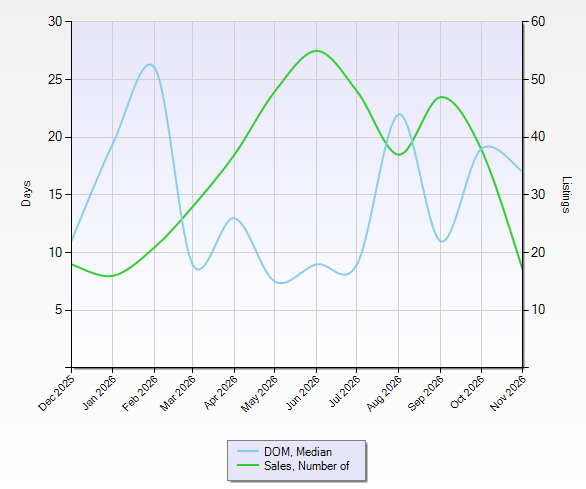
The TRI-S Area: A snap shot
II. THE MANITOBA EXCEPTION: RECORD HIGHS AMID RISING SUPPLY
Cross the provincial border into Manitoba, however, and the narrative flips on its head.
According to data compiled by the Winnipeg Regional Real Estate Board (WRREB), October 2026 was a month for the record books. Across the WRREB market area—which encompasses Winnipeg as well as key surrounding bedroom communities and the Interlake corridor—average sale prices across every major property category hit all-time October highs:
Overall Residential Average: Reached $416,083, representing a robust 3.5 percent increase year-over-year.
Residential Detached Homes: Climbed to an average of $455,860, up 3.1 percent from October 2025.
Condominiums: Shattered a historic psychological barrier, surpassing $300,000 for the first time in board history to settle at an average of $303,000.
What makes these record price achievements truly extraordinary is the backdrop against which they occurred. In a textbook supply-and-demand model, falling sales volume paired with rising inventory exerts downward pressure on prices. Yet in October 2026, Winnipeg experienced the exact opposite dynamic:
| Market Metric (October 2026) | National (CREA) | Winnipeg Region (WRREB) |
| Average Sale Price | $678,584 | $416,083 |
| YoY Price Change | -1.6% | +3.5% |
| YoY Sales Volume Change | -10.6% | -11.0% |
| Active Inventory Trend | +0.8% MoM (New Listings) | +13.0% YoY (Active Listings) |
Total MLS® sales in the Winnipeg region came in at 1,192 transactions for October, an 11 percent drop compared to October 2025 (which itself was the third-strongest October in board history). When measured against the five-year October average, however, 2026 sales volume was down just 2 percent—indicating steady, healthy underlying demand rather than a market collapse.
More notably, active listings across the region surged 13 percent year-over-year, propelled by a 20 percent jump in detached residential inventory. Active inventory has now reached levels not seen since prior to the 2020 pandemic.
Why are prices rising when buyers have 20 percent more detached homes to choose from and sales volumes are 11 percent lower?
The answer lies in compositional quality and structural affordability. At an average detached price of $455,860, a household in Winnipeg or Selkirk requires roughly half the income needed to service a mortgage on an equivalent property in Calgary, Ottawa, or Hamilton—and a fraction of what is required in Vancouver or Toronto. When the Bank of Canada nudges rates up by 25 basis points to 2.50 percent, a Manitoba buyer sees their monthly carrying cost increase by $50 to $80 a month. In Toronto, that same quarter-point hike adds hundreds of dollars to an already strained household budget.
Furthermore, the 20 percent surge in detached listings has finally unlocked pent-up move-up demand. Throughout 2024 and 2025, thousands of Manitoba homeowners sat on substantial home equity but refused to list their properties out of fear they would be trapped in bidding wars with nowhere to go. Now that pre-pandemic inventory levels have returned, move-up buyers are confidently entering the upper-middle and executive tiers of the market—purchasing $550,000 to $900,000+ detached homes and luxury riverfront estates—which naturally pulls the overall regional average price to record heights.
III. ON THE GROUND IN THE INTERLAKE: SELKIRK AND ST. ANDREWS IN TRANSITION
Nowhere is this shift toward quality, space, and long-term asset resilience more visible than along the Red River corridor north of Winnipeg, specifically within the City of Selkirk and the Rural Municipality of St. Andrews.
For decades, the Interlake region was viewed primarily as a quiet bedroom community or a weekend cottage destination. Today, fueled by remote work flexibility, corporate relocation, and a growing skepticism toward dense urban sprawl, Selkirk and St. Andrews have evolved into primary destinations for entrepreneurs, executives, and equity-conscious families.
1. The "Thinking Room" Premium in St. Andrews
Drive north along Highway 9 or wind your way up River Road past historical stone landmarks like St. Andrews on the Red and the St. Andrews Rectory, and you witness a housing dynamic that stands in stark defiance of modern suburban cookie-cutter development.
In St. Andrews, where residential lots routinely span 60,000 square feet (roughly 1.38 acres) or more, buyers are not merely purchasing square footage under a roof; they are acquiring autonomy, privacy, and land scarcity. Throughout 2026, municipal zoning discussions and community pushback against high-density subdivisions have reinforced the long-term value of large-lot legacy properties.
For independent thinkers and business owners migrating out of Winnipeg’s congested southern suburbs, River Road and its surrounding corridors offer what urban planners call "blue-ocean lifestyle value"—unobstructed views of the Red River, mature oak and elm canopies, room for detached workshops or recreational vehicles, and a sense of permanence that newly minted 35-foot city lots simply cannot replicate. In an autumn market with 13 percent more inventory, generic suburban homes sit on the market awaiting price reductions, while turnkey St. Andrews riverfront estates and manicured acreages continue to command premium valuations.
2. Selkirk’s "Blueprint" for Climate-Resilient Growth
Just minutes north, the City of Selkirk has positioned itself at the vanguard of municipal engineering and sustainable residential development in Manitoba.
While traditional suburbs across North America continue to build neighborhoods designed around short-term developer margins—characterized by narrow lots, concrete-choked root zones, and stunted saplings that struggle to survive a prairie winter—Selkirk has embraced a radically different model. Guided by progressive urban planning principles aligned with LEED-ND (Leadership in Energy and Environmental Design for Neighborhood Development) frameworks, Selkirk’s West End growth strategy treats green infrastructure as a core financial asset rather than an afterthought.
At the heart of this approach is the deployment of advanced urban forestry engineering, including Silva Cell suspended pavement systems—underground structural frameworks that allow tree roots to expand freely in uncompacted soil beneath sidewalks and roadways while managing stormwater runoff naturally. Modeled on the lush, overarching streetscapes of Selkirk’s historic Dorchester Avenue—often referred to locally as the "Dorchester Canopy"—this standard ensures that new neighborhoods develop mature, continuous tree canopies decades faster than conventional subdivisions.
For today’s data-driven homebuyer, this is far more than an aesthetic preference; it is a measurable financial hedge. Studies in urban forestry consistently demonstrate that mature, interconnected tree canopies reduce residential summer cooling loads by up to 10 percent, mitigate overland flooding during extreme prairie rainstorms, and add an estimated 7 to 15 percent premium to long-term property values. When energy prices are driving national inflation and municipal infrastructure costs are rising, buying into a community engineered for climate resilience is simply smart capital allocation.
3. Craftsmanship Over Speculation: The Anti-Investor Shift
Another defining theme shaping the 2026 Interlake market is the quiet pushback against speculative investor dominance. Over the past five years, institutional and single-family portfolio investors crowded out first-time and move-up buyers across Canada, driving up entry-level prices while often cutting corners on maintenance and build quality.
In Selkirk and surrounding Interlake communities, a counter-movement has taken hold—one that prioritizes primary-residence homeownership and precision craftsmanship. Leveraging Manitoba’s renowned network of Hutterite modular builders and local Interlake trades, new construction in the region is increasingly focused on superior building envelopes, high-efficiency mechanical systems, and structural longevity (such as deep pile foundations engineered specifically for Red River Valley clay soils).
Even in the resale market, buyers have become ruthlessly discerning. Consider the performance gap between two typical listings in Selkirk this autumn:
A dated 1970s bungalow requiring $80,000 in structural, window, and mechanical updates will languish on the market for 45 to 60 days, facing tough negotiations from buyers factoring in higher borrowing costs.
Conversely, a fully modernized 1,072-square-foot bungalow featuring updated windows, newer shingles, gleaming hardwood floors, a self-contained two-bedroom lower-level in-law suite (offering vital multi-generational flexibility or mortgage-helper rental income), and a deep, fenced 55-by-154-foot lot attracts immediate, decisive offers near list price.
Similarly, at the top end of the Selkirk market, fully renovated executive riverfront residences—properties exceeding 3,000 square feet with pile foundations, zoned dual-furnace climate control, spa-inspired ensuites, and resort-caliber backyards complete with inground pools and interlocking stone patios—are capturing the attention of relocating professionals who recognize that replacing such finishes at 2026 construction costs would easily exceed $1.2 million.
IV. THE INSTITUTIONAL & PUBLIC-PRIVATE FUNDING WAVE
Beneath the surface of daily MLS® transactions, a massive structural transformation is underway in how housing is financed and delivered across Manitoba—one that will reverberate through the regional economy for the next decade.
Following the federal government’s landmark $800 million commitment to construct 2,000 supportive and transitional housing units in Winnipeg, local private-sector innovators are stepping into the breach to scale affordable and workforce housing across the province. Most notably, the Winnipeg-based Collaborative Housing Alliance—a pioneering local real estate investment trust—recently unveiled plans to expand its public-private funding model across Manitoba.
By pairing private institutional capital with municipal land grants and provincial Manitoba Housing initiatives, this hybrid model aims to solve the persistent "missing middle" supply crunch without relying solely on taxpayer subsidies or speculative luxury condo developers.
Why does this matter to a homeowner in Selkirk or a buyer in St. Andrews? Because healthy regional housing ecosystems are interconnected. When workforce and transitional housing supply expands in Winnipeg and regional hubs like Selkirk, it relieves upward rent pressure, attracts skilled trades and healthcare workers to local employers (such as the Selkirk Regional Health Centre and local industrial parks), and stabilizes the broader economic base that underpins detached property values.
V. THE STRATEGIC PLAYBOOK FOR LATE 2026 AND EARLY 2027
As we approach the final weeks of 2026 and look ahead to the spring market of 2027, the divergence between national gloom and local opportunity requires both buyers and sellers in Manitoba to abandon outdated pandemic-era habits. The rules of engagement have fundamentally changed.
For Home Sellers: Presentation and Precision Are Non-Negotiable
With active listings up 13 percent overall and detached inventory up 20 percent across the WRREB region, the era of "list it on Friday, take five unconditional offers on Monday" is officially over. Buyers have options, and they are exercising patience.
Price to the Market, Not the Headline: While average prices are at record highs, those averages are being pulled upward by turnkey, high-value homes. Overpricing an unrenovated property by even 5 percent in an environment of expanded choice is the fastest way to become stale inventory.
Eliminate Buyer Friction: Today’s buyers—especially dual-income families and busy entrepreneurs—want move-in-ready certainty. Pre-listing home inspections, documented mechanical upgrades (furnaces, hot water tanks, pile certifications, roof dates), and fresh, neutral finishes pay exponential dividends at the negotiating table.
Invest in Cinematic Storytelling: In a digital-first search environment, static cell-phone photos are a liability. Sellers who invest in architectural photography, high-energy video walkthroughs, and targeted digital marketing that highlights lifestyle and infrastructure—not just bedroom counts—consistently outperform the market.
For Home Buyers: Leverage the Autumn Window
For buyers who have been waiting on the sidelines hoping for a crash in Manitoba home prices, the October 2026 numbers deliver a sobering reality check: prices are not falling here. In fact, they are grinding steadily higher even in the face of a 2.50 percent Bank of Canada policy rate.
Capitalize on Expanded Inventory Now: The 20 percent surge in detached listings represents the best selection Manitoba buyers have enjoyed since 2019. Waiting until April or May 2027—when seasonal competition returns and swap markets suggest the Bank of Canada will likely be holding rates steady—means trading away today’s negotiating leverage for spring bidding wars.
Look Beyond the Monthly Payment to Total Cost of Ownership: When evaluating a property, scrutinize its structural bones and operating efficiency. A home built on piles, outfitted with zoned heating, modern insulation, and surrounded by mature energy-saving tree canopy will cost substantially less to own over a ten-year horizon than a cheaper, poorly insulated build.
Think in Decades, Not Quarters: Real estate wealth in Manitoba has never been built on overnight speculative flips; it is built through steady equity accumulation, low property-tax-to-value ratios, and community stability. Whether acquiring a starter bungalow with a basement suite in Selkirk or securing an acre of riverfront legacy in St. Andrews, the winners in this market are those who prioritize enduring quality over short-term noise.
CONCLUSION: THE VALUE OF STEADY GROUND
As autumn settles over the Red River Valley and winter prepares to lock the northern waterways in ice, the contrast between Canada’s coastal housing markets and Manitoba’s heartland could not be clearer.
National commentators will spend the coming months dissecting every basis point from Ottawa and every fractional dip in Toronto’s condo index. Meanwhile, here in Winnipeg, Selkirk, and St. Andrews, families are quietly building equity, entrepreneurs are investing in climate-resilient communities, and real estate values are reaching historic milestones.
In a volatile world, there is an undeniable premium on steady ground. And right now, there is no steadier ground in Canadian real estate than right here at home.